|
Other Articles:
|
|
THE MOURNFUL AND
HAUNTING SOUND OF THE FOGHORN
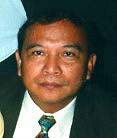
By CESAR TORRES
July
8, 2005
 I came to America
in November 1985, landing in San Francisco aboard a Northwest jumbo
jet with a borrowed $10 in my pocket. I came to America
in November 1985, landing in San Francisco aboard a Northwest jumbo
jet with a borrowed $10 in my pocket.
My children and I
could have left the Philippines in 1983. But somehow, if you are a
faculty member of the University of the Philippines’ (UP) Department
of Political Science, there seems to be this unarticulated
expectation that we are supposed to offer our lives for our people,
to be with them till our last breath. So we did not come to America.
At that time, the
Philippines was considered to be a “social volcano” on the verge of
explosion. The Marcos dictatorship was breaking apart. Millions were
marching on the streets protesting the assassination of Ferdinand
Marcos’ fraternity brother, Benigno Aquino. There was hunger,
poverty, injustice, and a hopeless future. Rebel groups, such as the
National Democratic Front and the New People’s Army were confident
that with 30,000-armed guerillas, they could take over and establish
“National Democracy” in the Philippines. Indeed, for the many, there
was general discontent and hopelessness all over the land.
With a heavy
heart, I decided to leave. I boarded the massive, cathedral like,
Northwest Jumbo jet. With me were Filipinos who looked like they had
come from the rural areas in the Philippines; perhaps immigrants
like me. Then last to board were the Vietnamese refugees, those who
survived the bombs, the grenades, Agent Orange, the helicopter
gunships, submachine guns, land mines, and the pungi stakes. They
were lucky to escape the carnage in their land during that fierce
struggle among themselves and their American allies on one hand, and
the Vietnamese Liberation Army and their allies, the Red Chinese and
the Soviets, on the other hand. They were lucky to survive the
pirates and the elements in the South China Sea. They were lucky to
survive their temporary shelters in Bataan and Palawan in the
Philippines.
It was a chilly
autumn when I arrived in San Francisco. The silence in Berkeley
where my wife was staying as a manager of a care home, compared to
the shouting, the laughing, the screaming of playing children in the
UP campus, was almost palpable.
The loneliness,
the nostalgia, and the hankering for the familiar places that I had
left behind could not be avoided. This was aggravated by the fact
that despite my education, my training, and my varied experiences in
the Philippines, I could not be hired. Day in and day out I would
send letters of application. No luck.
In the meantime,
the turmoil in the land I left behind, the only colony of the United
States, went on unabated.
During the chilly
nights of autumn, jobless, without any friends, and marooned in a
faraway land, sleep was difficult to come by. When the fog would
roll in, I could hear the sound of the foghorn in the San Francisco
Bay. Mournful, incessant, haunting, warning mariners to be careful,
to steer their ships with utmost care. There could be unknown
perils beyond the mist and the fog.
The “social
volcano” in the Philippines finally erupted in February 1986.
Millions had finally gathered enough courage and strength to oppose
Ferdinand Marcos and his cabal in a show of massive defiance at
Epifanio de los Santos Avenue or EDSA. Marcos had ruled the
Philippines for 20 years — assisted by the military and other
groups. He was flown to Hawaii by a US aircraft. The “People Power
Revolution” now referred to as “EDSA I” was miraculous. Not a single
life was lost.
From 1986, this
country, whose people was referred to by an American writer as
“Little Brown Brothers”, would limp along until January 2001, when
the Filipinos would gather again in EDSA, this time to demand the
resignation of a movie actor-President whose proclivity for the good
life was well known, Joseph “Erap” Ejercito Estrada. The military
sensing the massive outpouring of anti-Estrada sentiment, withdrew
its support. There was mass resignations from Estrada’s cabinet. He
left Malacanang Palace. He is now incarcerated awaiting the
resolution of his case for plunder. This was the second political
miracle. Not a single life was lost in “EDSA II”.
Estrada’s
successor, the second female president of the Philippines, Gloria
Macapagal-Arroyo, daughter of a president, educated in the US, with
a Ph.D. in Economics from the University of the Philippines, took
over the presidency which was declared vacant by the Philippine
Supreme Court. Despite a vow that she would not run for the
presidency in 2004, the end of her term, Ms. Arroyo broke her
promise. She ran for the presidency where she was pitted against a
high school drop out, a movie actor too. The election was closely
fought. It helped Ms. Arroyo that there were three other candidates
for president, a lawyer who used to be a member of her cabinet, a
former policeman who was a ranking military officer during the time
of the dictator Marcos, and a candidate who was banking on his
religious adherents.
The consensus was
that if Ms. Arroyo won, it would not be by a large margin. The
Filipinos wanted change. It did not matter that the possible
replacement was someone who did not finish high school, as long as
Ms. Arroyo was replaced. Despite protests from her political
opponents, she was declared the winner last year.
And then all hell
broke loose. First, her son and her husband, were linked to an
illegal gambling very popular in the Philippines, known as “Jueteng”.
This was followed by the presentation of a tape recorded voice which
sounded like the voice of Ms. Arroyo. The tape seems to indicate
that Ms. Arroyo had talked to an official of the Philippine
Commission on Elections, inquiring about her votes in Southern
Philippines. After stonewalling for several days, she finally came
out publicly that indeed, it was her voice that could be heard. And
she begged the Filipinos for forgiveness.
As we go to press,
Metropolitan Manila is again in turmoil. There are mass actions.
Retired generals, other military people, religious groups, students,
“progressive groups”, the National Democratic Front, other groups
are clamoring for Ms. Arroyo to resign because allegedly she cheated
during the election. There is talk of impeaching her. In the
Internet, there are even psychos who want to kill her. There is talk
of a military-civilian junta. There is talk of a revolutionary
government. There is talk of a coup d’etat. There is talk of a
civil war.
In the stillness
of the night, I seem to hear the mournful, incessant, haunting sound
of the foghorn again. But this time it seems to be warning the
leaders of the 87 million Filipinos to be careful. There may not be
a miracle in EDSA ever again.
post comment
|
0 comments
|
