|
Other Articles:
|
|
PAGHALAD KAN SAN MIGUEL ARCANGEL ~ MAHAL NGA PATRON HAN MGA BASAYNON HA KALIBUTAN
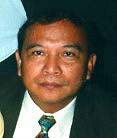 By CESAR TORRES* By CESAR TORRES*
October 29, 2011
Dako nga akon pagpasalamat nga guin
hangyo ako ni Mrs. Lourdes Colinares-Seludo, mabaysay nga pinalangga
ni Clarito Seludo, para maghatag han akon mga panhuna-huna hi-onong
hini nga ira pagsalin-urog o pag karawat han hermandad hini nga
109nth piesta nga celebrasyon didto ha Basay. Salamat Clarito ngan
Lourdes.
This piece will not be devoted to the
mystical and divine attributes of Saint Michael Archangel, the
Commander of the Army of God in the eternal Battle between the
forces of Good and Evil. Looking at that 1636 soul-bending painting
of Guido Reni of San Miguel with a drawn sword with his left foot on
the head of Satan who is prostrate on the floor, no religious tract
is necessary to provide “proof” to the Basaynon believers all over
the world, that indeed, the Saint is real. Besides, I cannot claim
to be knowledgeable about the divine spark of our humanity.
Consequently, this piece will be devoted to the mundane and very
ordinary issues impacting the Members of Basaynon Katiguban in North
America and an attempt to understand why the family of Clark and
Lourdes and their children will take on this tremendous
responsibility of hermandad.
I have never been to Basay, that is,
the town proper. But I spent several days and nights in Amandayehan
with the late Mano Andresito Cabueños, before he became a famous
Regional Director of the Bureau of Posts. We were housed in the
elegant and picturesque home of the late Leling Yancha when he was a
candidate for congressman, against, among others, his cousin,
Valeriano Yancha. The house was so beautiful. Overlooking San
Juanico Straits, it had a panoramic view of the hills of Babatngon
in Leyte. Gazing at the setting sun in the Babatngon hills was a
magical experience beyond words. It was heavenly. At night, while
waiting for the arrival of Sir Leling Yancha from Manila who would
provide us the wherewithal for his congressional campaign, we would
drink tuba. One night, with a hook, line and sinker that I dropped
to the sea below from the nipa hut on the cliff extending from the
commodious house of Sir Leling Yancha, I was able to catch a Moray
Eel. It was a delicious sinugba for our sumsuman.
When I chaired the Skeletal Force that
established the U.P. in Tacloban, I used to spend lonely afternoons
in a restaurant in Camp Bumpos in Tacloban. When the weather was
clear, I would gaze across Cancabato Bay at Basay, at the zooming
spire of the Basay Church rising to the skies. Basay had a special
place in my heart. Hence, there were so many times, when I would
make an appeal on the Tacloban radio stations, appealing to the
Basaynon youth to enroll at the U.P. in Tacloban. I think many of
them did enroll. Lydia’s family had a lot of relatives in Basay,
such as Elsa and Dolores Froilan, classmates in Samar High. We met
the high-achiever Dolores in Edmonton and San Francisco.
Of course, nothing lasts forever. I
had to go back to U.P. Diliman. But for one reason or another, I
could never cross to Basay to renew my friendship with one of the
most brilliant persons I have ever known, the late Potenciano Geli,
also a classmate in the grades, like Clarito Seludo. It was not
meant to be. But before I could depart for California, however, I
attended the fiesta celebration in Catbalogan, in the company of the
Villahanon contingent who had to perform a cultural dance in
Catbalogan. There I met Clarito in 1984. The next time I would meet
him would be in San Francisco, California.
If I have never attended a fiesta
celebration of the Basaynons in Basay or in Manila, by a fluke of
circumstance, I cannot count the number of times I have attended a
Basaynon fiesta in America. We even went to Edmonton in Canada just
to attend a Basaynon fiesta in 1996 when Brenda and other Cabigons
were the sponsors. It was an event to remember. We did not sleep the
whole night through discussing with Fr. Marito Rebamontan and
Brenda’s son, Brandon, the situation of the Samarnons and the
Filipinos all over the world. Then a trip to Banff via Lake Louise.
If one does not believe in God, to behold the pristine, untouched,
unpolluted, Rocky Mountains can compel you to make the sign of the
cross. During that fiesta also, human nature was very apparent and
hilarious. There were “dialectical exchanges” involving Padi Dr.
Artoteles Tandinco and some leaders of Basaynon Katig-uban. This was
my introduction too, to a famous Basaynon, Adelbert Batica. Thank
you San Miguel for the opportunity to attend a celebration in your
honor in Canada and to behold the majesty and splendor of God’s
handiwork on Earth —Banff, Lake Louise, and the so pristine, so
blue, so clean, bereft of human habitation or garbage, the lakes in
the Rocky Mountains. And the Pine trees zooming to the blue skies.
If I cannot memorize the Rosary or
sing with fervor “Mother of God” and “Santo Verbo”, I believe that
the Omnipotent or San Miguel, has a way of balancing the scales. My
daughter Mara, and her son, Paolo, spent several nights in Basay
when their Lola Pacita Froilan-Cabigon passed away. Paolo who was
three years old at that time, could not relax. So Ellen, his sitter,
had to pakyaw a tricycle. They went round and round Basay so that he
could sleep. They bought six Tikug mats which were brought to
America.
Most Samarnons in America who come
from major towns in Samar celebrate fiestas. The Catbaloganons
celebrate their fiesta for San Bartolome in San Francisco, Los
Angeles, New York, Chicago, Indiana, Las Vegas, and in Canada. They
implore the intercession of the Patron Saint of the fishermen
because there is no more fish in Maqueda Bay. The Calbayognons,
celebrate their fiestas in San Francisco and Los Angeles and perhaps
in other major cities in America. The Guiuananons celebrate two
fiestas in one year in San Francisco, Los Angeles, sometimes, San
Diego. The Boronganons celebrate their fiesta in San Francisco and
Los Angeles. The Calbiganons give their homage to the Lady of the
Anunciation in Los Angeles, San Francisco, and New York. One time, a
Calbiganon from Australia flew to Los Angeles to become hermana of
the fiesta. We admired her devotion to the Virgin Mary. The
Doloresnons always celebrate their fiesta in San Francisco. The
Villahanons International are not regular anymore in celebrating
their fiesta to the Santa Rosa de Lima. But the family of the late
Mrs. Honoria Seludo-Tabungar were the first to celebrate the fiesta
of the San Rosa in San Francisco. They were followed by the family
of the abducted and still missing Fr. Rudy Romano. I don’t know if
the Catarmananons are still celebrating their fiesta in Los Angeles.
As far as I know, they have never celebrated their fiesta in San
Francisco. Samarnons from other towns do not celebrate their fiestas
in America. They just attend the fiestas of other towns.
The Fiesta Kaadlawan are always
preceded by nine novenas. Sometimes, the devotees hold three novenas
in one day, usually on three successive Saturdays, thereby
completing the nine novenas. The Katbaloganons have never deviated
from their tradition of observing the nine-day novena every day, for
nine successive days. The devotees of Saint Bartholomew attend the
novena in the evenings in the churches of the Mother of Perpetual
Help in Daly City whose Parish Priest is Fr. Tony Petilla, the
primus inter pares among the Filipino priests in North America and
before him, Fr. Vic Balagapo. Then there is dinner, and irignom.
Some go home with some food which are surreptitiously hidden in
plastic and brown bags for their pet dogs and cats, the usual excuse
if devotees are looking at the “take home” of some folks.
Before the economic meltdown in
America, when life was a little bit better for us, the fiesta
celebrations would include a “Night Affair”, a party with the usual
dancing in some five-star hotel. This was the equivalent of the
“Bispera” celebration in the Homeland. The gentlemen “Patronizers”
would attend the “Night Affair” in a suit and a tie, trying to hold
their breaths so that their stomachs are not bulging out. The women
would come in their elegant bestidas with diamonds flashing.
They are chubby. No one is emaciated among the ladies. There will
always be a curacha. The last Basaynon whom I saw dancing the
curacha was Mana Julie Tabungar. Her partner was Teddy James
Doloy Mama sa Tuka Coquilla, before he became a famous politico in
Samar.
So there are variations in how we
Samarnon Catholics venerate our respective Patron Saints in America,
so that the Saints can intercede to the Lord God to bless us. But
the most unique, and perhaps, the most admirable and exemplary would
be the annual fiesta celebration of the Basaynons in the US and
Canada. They have just one organization that encompasses the
Basaynons all over North America, “Basaynon Katiguban USA & Canada”.
This acts as the coordinating mechanism for their fiesta
celebrations every year.
Unlike other fiesta devotees in
America, for one, their nine-day novenas are observed all over the
North American continent. If a novena is being observed by a family
or a group of sponsors in say, Sacramento by the family of Clark and
Lourdes Seludo, no other Basaynon novena will be observed in Los
Angeles, or Chicago, or New York, or San Diego and so forth. The
novenas are assigned to volunteers all over North America.
The Hermandad of the fiesta follows
the same pattern. If a family volunteers to be the hermanos or
hermanas in say Sacramento, California, like Ver and Dr. Dina Yancha,
or Minnesota by Adelbert and Elsa Batica, then the Basaynons all
over America and the world will converge on Sacramento and the Twin
Cities in Minnesota. There will be no Basaynon Fiesta in any part of
North America for that year.
In this manner, the “Patronizers” do
not have to spend a lot of money and exert a lot of effort so that
San Miguel can protect them from the minions of Lucifer. And then,
they get to visit other places in the US and Canada. This 2011 here
in America, Ambet and Nette Pascua, the hermano and hermana, have
asked us if we will attend the fiesta in Las Vegas. I hope San
Miguel will intervene and prevail on the slot machines to spew out
those dollar coins without letup for the Basaynon fiesta devotees.
There is another interesting religious
tradition among the Basaynons in America. When deliberating on the
mundane aspects of their religious devotion, it is the women who are
engaged in intense debate. Their husbands are singing and drinking.
They have such heavenly voices. So one can opine that the Basaynons
is a matriarchal society. But I don’t think they are “USF”, “Under
the Saya Forever”.
So the annual San Miguel fiesta in
America which the Basaynons look forward to, runs like this: Nine
day novenas, a Bispera, and the “Kaadlawan”. Somehow, this is still
insufficient to show how they venerate San Miguel. The “Kaadlawan”
has to be followed by the “Amen”, the last event of the annual
fiesta. The “Amen” is the last word after a prayer, when the
devotees say “Amen” or “So be it”. During the fiesta “Amen”, the
Basaynons will pray. And then the usual happenings will inevitably
follow –
eating, drinking, and singing. And perhaps some plastic and paper
bags for the pet dogs and Miming.
For sure, the Basaynon fiesta in Metro
Manila would be different from the pattern in America. And
definitely, the fiesta in Basay itself, the very reason why
Basaynons all over the world look forward to a fiesta celebration in
America or in Metro Manila, would be the genuine celebration.
One does not need to make a study of
the fiesta variations in the Samar towns. The pattern would be more
or less uniform. A nine-day novena every day. Some cultural and town
activities. A horde of Patronizers and Samarnon priests descending
on Basay during the Kaadlawan. And on the Big Day itself, the Bishop
of Calbayog says the mass. And all day long, people walking all over
the town, going from one house to another, enjoying the festivity,
the camaraderie, the good food, the renewal of friendships and
making new friends. And perhaps, naguuba-ubahay.
With the advent of the multitude of
Filipinos in Diaspora, in the case of Basay, I have heard that there
is a “Balikbayan Night” when Basaynons from all over the world visit
their beloved hometown. They are gathered in the plaza. And the
usual festivities transpire.
This year, the family of Clarito and
Lourdes Colinares-Seludo are the fiesta sponsors. If there is
anything that can be said of the Seludo family, tribute must be
expressed to Mana Mila Seludo, the Seludo eldest, for petitioning
Clarito and Man Nalding Seludo to come to America. Man Nalding is
the only Samarnon I know who turned his back at becoming an Amercano.
He gave back his green card. And chose to stay in the Homeland. He
was afraid na pipikutin siya ng mga girls in America. Ang iba gurang
na. The story of Dr. Manolito Seludo is a sad one.
But unlike the Tawag ng Tanghalan
Champion, the tenor, Man Nalding Seludo, a very famous leader in the
Department of Education in the Homeland, the family of Clark stuck
it out in San Francisco, through thick and thin. First Clarito
became a clerk in his Tay Sotero’s hardware store in Los Angeles.
Then when Lourdes arrived a few years later, they moved to San
Francisco. So here they were in San Francisco, the Seludo children,
with names all starting with “M”—Mercia in Basay, the eldest, and
Mildred, then Mitchell, Michael, Marlon, Martin, Melina, Myla and
Melissa. I think they are all married now. Except for Martin who is
rumored to commute in the San Francisco Bay Area in a helicopter.
Samarnons tend to smell each other
wherever they are. It was a Calbiganon, the late Mano Veding
Cabrigas, whom I used to address as “Ambassador”, who informed us
and brought us to where the Seludos were residing in San Francisco.
Afterwards, in the numerous occasions when there would be the usual
parties and irignom in their home, the children would all be there
listening, watching, smiling, doing errands for the many people in
the Seludo household. Whether their house was just a two-bedroom
affair when they were new in San Francisco or the multi-room
“mansion” at the height of the Seludo popularity in California, the
ambiance was always the same. People, people, people. Drinking,
eating, debating, singing, laughing, having a good time in the
company of their friends, kins and fellow Samarnons.
Clark and Lourdes’ family has indeed
multiplied. Mercia is married to Ulrico Adona. They have four
children. Mildred the lovely nurse is married to Alex Cordero. They
have a son, Justin Ryan. Mitchell the bohemian, is married to the
ever smiling and beautiful Melna Froilan. They have two sons—Matthew
and Maithan. The younger ones have also their husbands and wives and
their children. My apologies. I cannot recall their names.
We can debate the divine, historical,
political, cultural, and other dimensions which serve as the
foundations of fiesta celebrations in Basay and in Catholic
Philippines where 85% of the 101 million Filipinos are Christians.
Whatever the reasons, they are part of our national psyche as a
people. Even if we are unsure if a Saintly advocate is indeed
necessary who will intervene on our behalf to God. There is no
question that prayers, the spirit, mind over matter, good thoughts
are more powerful than the material.
But at the same time, we are keenly
aware of the sad realities of our people in the Homeland, especially
the Samarnons, and of course the Basaynons. Many, many of them are
our fellow Catholics. We cannot close our ears, our eyes, our minds
to the ongoing mantra –
the pagpag eaters, the garbage
subsisters, those sleeping with the dead in the graveyards, those
going home to their cavernous homes under the bridges, the itinerant
humans who rest their tired bodies on rolling carts, the brutalized
domestic helpers in Muslim countries such as Arabia, and all over
the world.
If Saint Michael, the Archangel, is
the General of the Army of God fighting Evil, hunger, injustice,
oppression, and hopelessness, we can come down a little lower in
associating the admirable fiesta celebrations of the Basaynons, and
the sacrifices of fiesta sponsors like the Family of Clark and
Lourdes Seludo. Let us hearken to the stirring words of Pope Paul
VI, in his Encyclical, “Populorum Progressio”:
“We must make
haste. Too many people are suffering…The present state of affairs
must be confronted boldly…Everyone must lend a ready hand to this
task, particularly those who can do most by reason of their
education, their office or their authority.”
Hopefully we will respond fervently:
“So be it.” “Matuman kunta.” And as the Basaynons would intone when
they conclude their fiesta celebrations all over the world: “Amen!”
Maupay nga Patron ha aton ngatanan,
Basaynon o diri Basaynon, kalooyan unta kita han Makagarahom han
Kalibutan, pina-agui han pangamuyo ni San Miguel Arcangel.
[*The
writer was a classmate of Clarito Seludo in the grades. He was in
charge of the Task Force that organized the UP in Tacloban. He was
former professor of Political Science in Diliman. In San Francisco,
he was one of the prime movers—together with Mana Julie Tabungar,
the late Naty Villarin Silva and Peter Padul, Gilda Cabrales del
Pilar, the brothers Joseph and June Margate, Larry and Nelia Orejola,
Benny Cojuangco, Yolanda Picardo, Quint Doroquez, Pat Figueroa and
Pete Masi, Florita Oca and her children, Precing Agaton, Ben Naranjo,
Baby Lim-Paus, Dinah Seludo and Frank Bunuan, and Lilia Amasa —of
the San Francisco-based Samareños of California. He was the only
Filipino to be given the coveted “Sustained Superior Performance
Award” in 1996 by the State of California. A denizen of the
Internet, he is an owner and a moderator of two listserves which he
consider important—Gugma Han Samar Cyberspace Movement and Worldwide
Filipino Alliance. He used to be a columnist of the monthly news
magazine published in San Francisco, “The Filipino Insider”. This
piece was inspired by the haunting and magical story penned by a
famous Basaynon literati, Mag G. Boleche, in his “The Beautiful
Bungansakit” published in the souvernir program when Dr. Artoteles
L. Tandinco was the Hermano in 1993. The writer is a Villahanon, a
Catbaloganon, and a temporary Californian. He can be reached at
CesarT1185@gmail.com.]
post comment
|
0 comments
|
